
About Us
‘Tactile Warmth’ is a vertical e-commerce platform that redefines the value of China’s intangible cultural heritage crafts through digital design and a transparent supply chain. Addressing the lack of modern commercial expression in traditional rural crafts and the crisis of trust in the market caused by industrial products masquerading as purely handcrafted items, the project transforms handicrafts from remote mountain villages into fashion items that align with contemporary aesthetics.
-
A curated marketplace dedicated to living heritage and slow fashion.
-
We reject mass-produced industrial goods. Through on-site visits and video documentation, we capture the authentic textures of handcrafted items and plant-based dyes, thereby building tangible trust.
-
Intangible cultural heritage practitioners and rural women’s workshops based in the mountains who need support. We practise fair trade, with 85 per cent of the profits going to the artisans.
Bridge Indigo
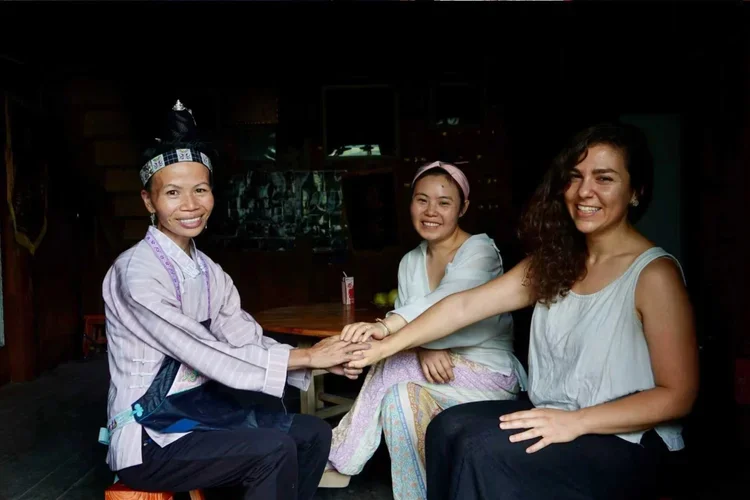
Co-founders Sarah Horowitz (USA) and Liu Xiang (China) met in 2015 whilst working as programme officers at a local non-profit organisation supporting ethnic minority textile artists in rural Guizhou. Over the following decade, they developed a deep passion for the tradition of batik.
Bridge Indigo is a social enterprise dedicated to building bridges—connecting cultures and generations, villages and cities, and the past and the future. Bridge Indigo exists to create fair and sustainable pathways for women in rural communities, enabling them to share their work with the wider world without having to leave their homes or their culture.
Puzhen Tie-Dye Museum
Puzhen Tie-Dye Museum is situated in Zhoucheng Village, Xizhou Town, Dali, and is China’s first specialised museum dedicated to showcasing and preserving the Bai ethnic group’s tie-dye culture.
Founded by Duan Yinkai, a representative inheritor of national-level intangible cultural heritage, and his family workshop, it is now a national-level demonstration base for the productive protection of intangible cultural heritage.
Puzhen Artists Group
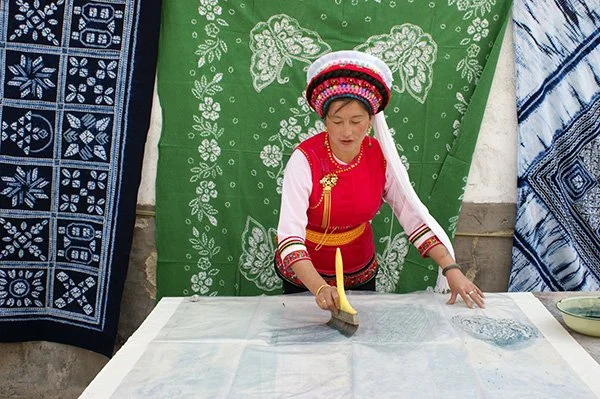
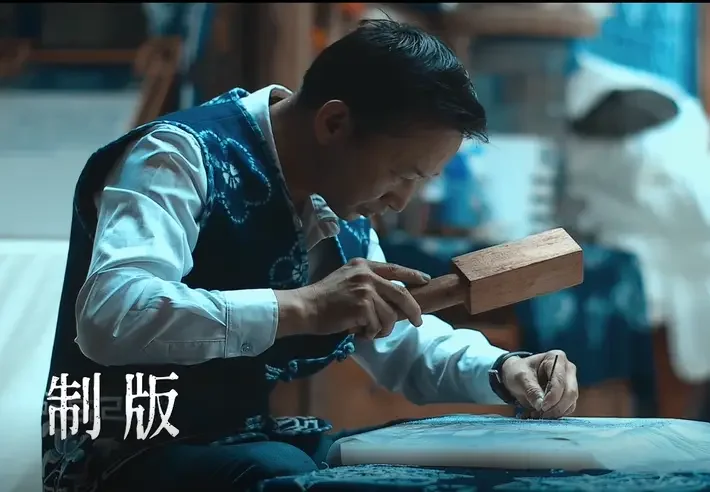
Duan Yinkai
Duan Yinkai is the ninth-generation heir to the Bai ethnic group’s tie-dyeing craft in Zhoucheng, Dali, and a nationally recognised representative inheritor of intangible cultural heritage. She has devoted herself to mastering the art of ‘tie-dyeing’, innovating over a hundred traditional stitching techniques, and, together with her husband, founded the Puzhen Tie-Dyeing Museum and Workshop in Dali City. She adheres to traditional plant-based dyeing methods, organises educational and research activities, and promotes the integration of Bai tie-dyeing into contemporary life and onto the international stage.
Duan Shukun
Duan Shukun is the 18th-generation heir to a family of tie-dye artisans in Zhoucheng, Dali; a provincial-level representative inheritor of the Bai ethnic group’s tie-dyeing craft; and the director of the Puzhen Tie-Dye Museum. Together with his wife, Duan Yinkai, they complement each other’s strengths—he specialises in dyeing whilst she focuses on tie-dyeing; he has devoted himself to researching natural plant dyes such as gardenia and logwood, and has rescued and catalogued over a thousand traditional pattern templates. Through the integration of ‘intangible cultural heritage and cultural tourism’, he has established a base for production, research and education, driving the industrialisation of Bai tie-dyeing and its expansion onto the global stage.
Hiembroid
Hiembroid is a brand specialising in modern Suzhou embroidery-inspired formal wear and affordable luxury accessories, founded by Yu Zhujun, a third-generation heir to a Suzhou embroidery family originally from Zhenhu, Suzhou.
Hiembroid breaks away from the traditional limitations of Suzhou embroidery—which was previously used solely for decorative items such as screens and hanging scrolls—and focuses on integrating Suzhou embroidery with modern ‘New Chinese-style’ clothing, high-end formal wear and everyday accessories.
Hiembroid Artists Group
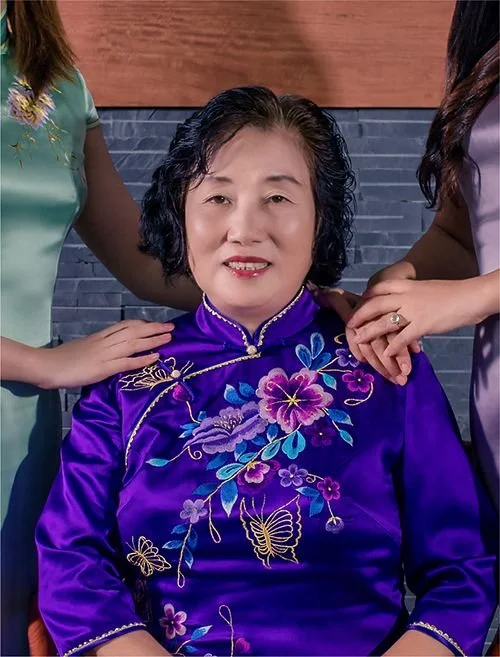
Lu Juying
Lu Juying was born into a family of Zhenhu embroidery artisans in Suzhou. She is the fourth-generation successor of Shen Shou, the ‘Sage of Embroidery’, and a bearer of the intangible cultural heritage of Suzhou embroidery. She is a master of exquisite techniques such as double-sided embroidery. In the 1980s, she was the first to introduce Zhenhu embroidery to the market and is hailed as the ‘pioneer’ of the Zhenhu embroidery industry and the ‘mother of the Suzhou embroidery economy’.
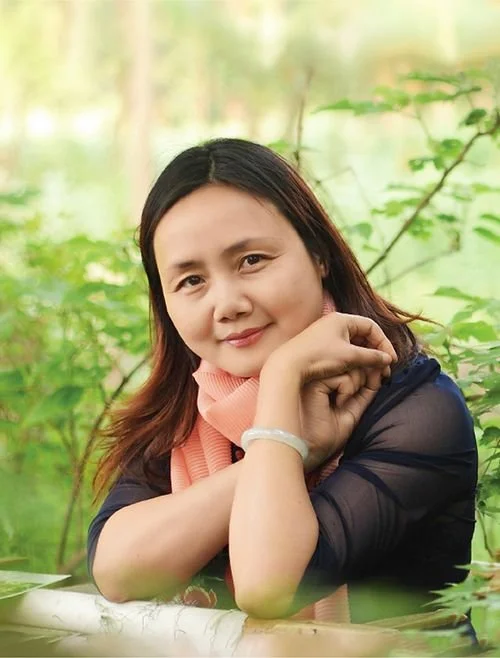
Lu Meihong
Lu Meihong is the second-generation leader of a family of Suzhou embroidery artisans in Jiangsu Province. Having devoted more than forty years to her craft, she has perfected the art of flower-and-bird embroidery—particularly peony motifs—through her masterful use of the ‘random stitch’ and ‘laced stitch’ techniques. Known as the ‘Lu Peony’, she has established an art gallery to promote contemporary cross-disciplinary applications of Suzhou embroidery and the preservation of her family’s artistic heritage.
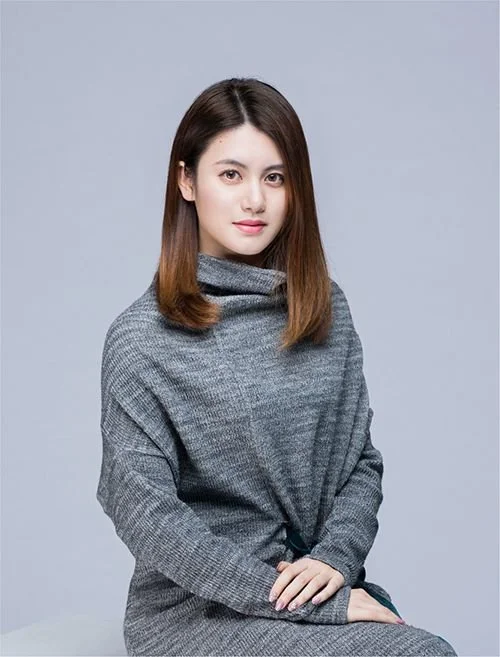
Yu Zhujun
Yu Zhujun hails from a family of Suzhou embroidery artisans in Zhenhu, Suzhou, and is a third-generation practitioner of the craft. Breaking free from the constraints that confined Suzhou embroidery to traditional screens and decorative pieces, she founded the ‘Hiembroid’ brand; guided by the philosophy of ‘making Suzhou embroidery an intangible cultural heritage that comes to life’, she has masterfully blended embroidery with high-end New Chinese-style ready-to-wear garments and accessories, thereby promoting the integration of intangible cultural heritage into fashion and its expansion into international markets.
Xinjiang Artisans
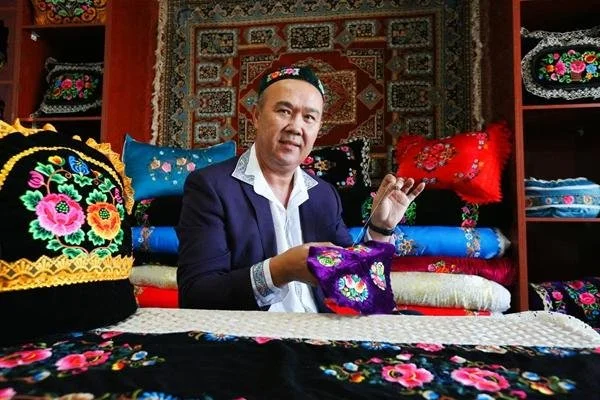
Kader Rehman
Kader Rehman has shattered the traditional prejudice that ‘embroidery is exclusively for women’, becoming a rare ‘male embroiderer’ in Hami, Xinjiang, recognised at the national level for his contribution to intangible cultural heritage. By blending Central Plains flat embroidery with Uyghur floral motifs, he has pioneered innovative cultural and creative products based on intangible cultural heritage. Furthermore, through university-based research, training and mentorship programes, he has helped thousands of local female embroiderers increase their incomes and improve their livelihoods.
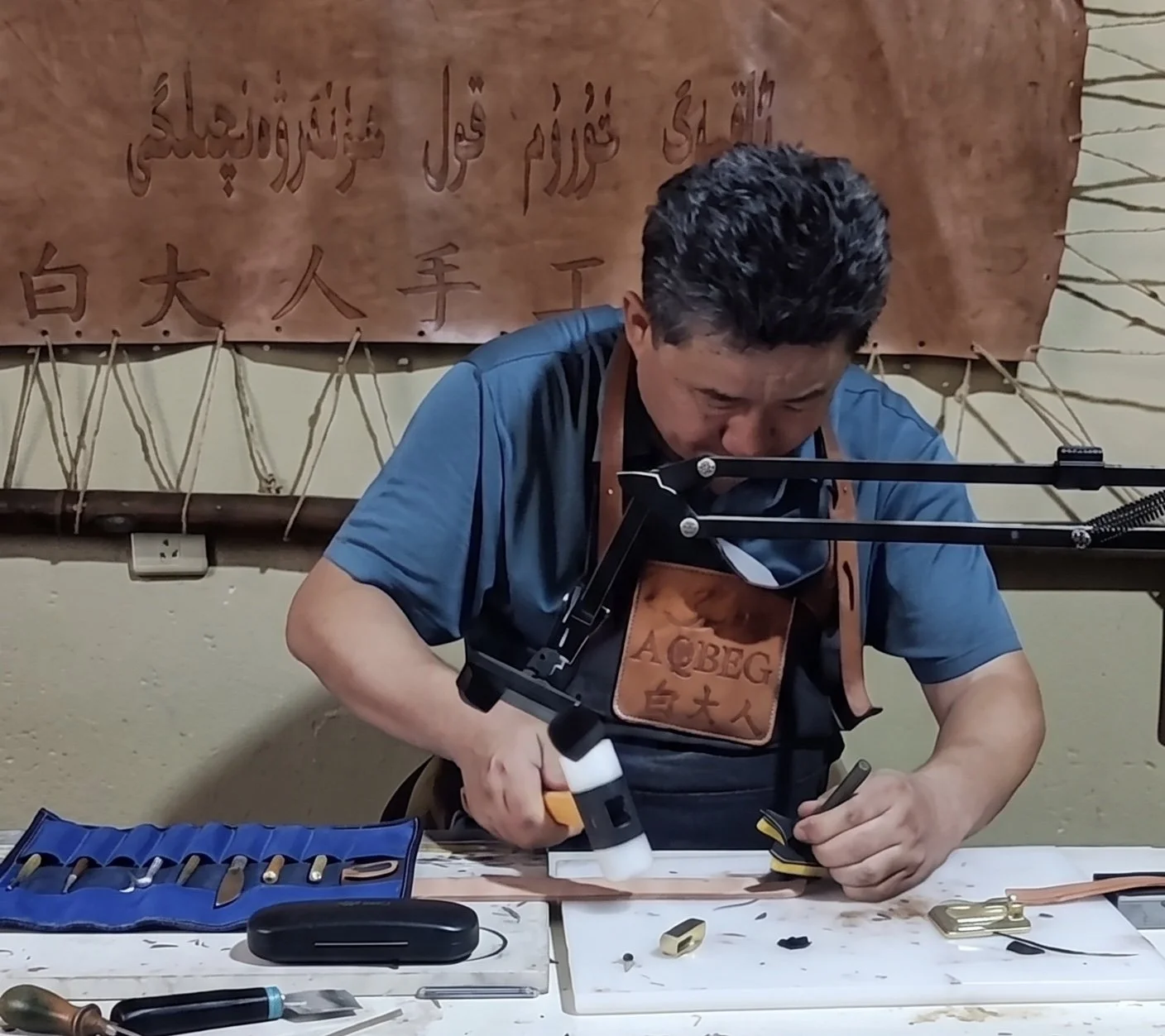
Ablikim Abdureyim
Ablikim Abdureyim, a Uyghur artisan specialising in handcrafted leatherwork, is based in Hami, Xinjiang, where he faithfully preserves traditional leathercraft techniques. He chisels intricate, three-dimensional reliefs featuring Western Regions-style scrollwork and geometric motifs. Through hand-colouring and double-needle saddle stitching, his pieces develop a rich patina over time, embodying the rugged texture of the Silk Road oases and the warmth of handcrafted artistry.
Want to contact artisans
Pop your details in the form and let’s create something delightful together.